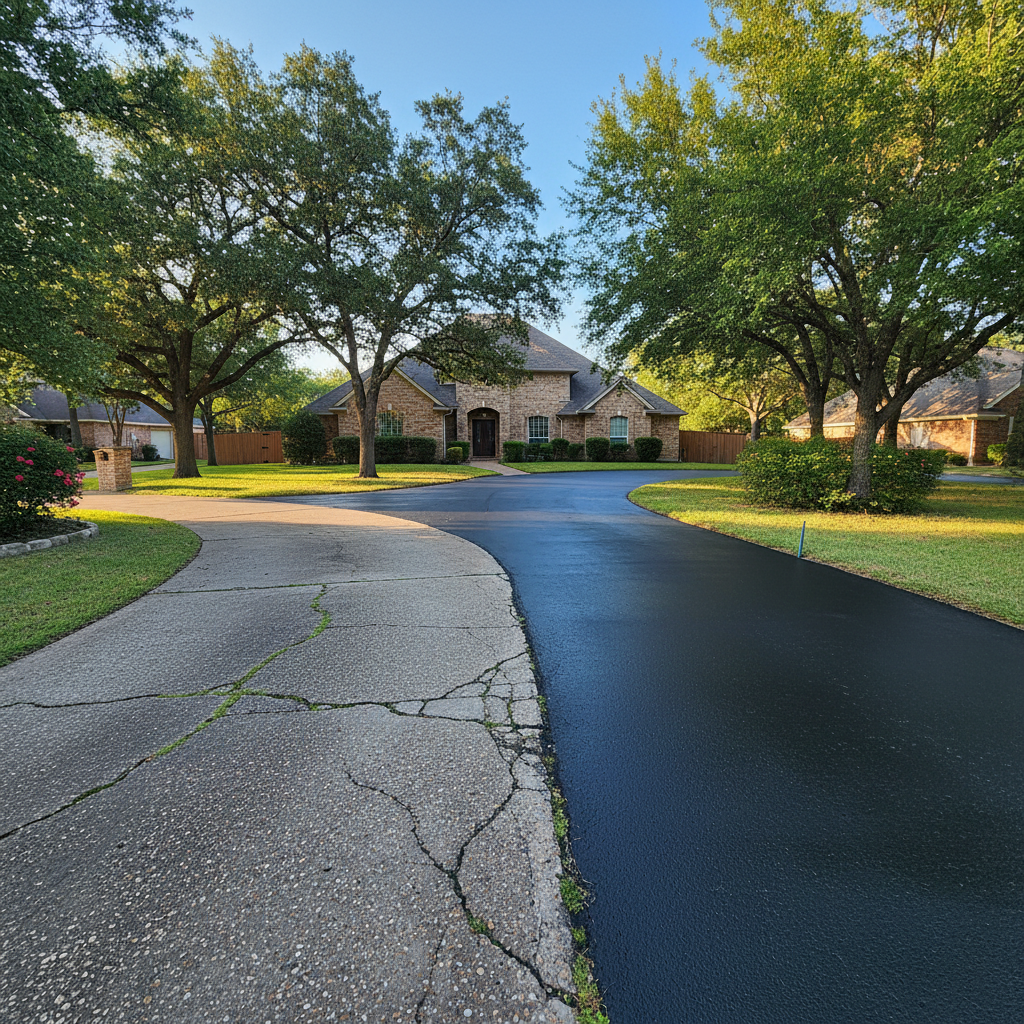
Alright, let's talk about protecting your asphalt. You've probably heard terms like 'sealcoat' and 'slurry seal' thrown around, especially when you're looking to spruce up or extend the life of your driveway here in Fort Worth. They sound similar, right? But trust me, they're not the same thing, and picking the wrong one can cost you money and headaches down the road. I see folks get this mixed up all the time, so let's clear it up.
What's the Difference, Really?
Think of it like this: traditional sealcoating is like a fresh coat of paint for your driveway. It's a thin, protective layer, usually an emulsion of asphalt, water, and some fillers. It's great for sealing small cracks, improving appearance, and protecting against UV rays and minor spills. It's preventative maintenance, pure and simple.
Slurry seal, on the other hand, is more like a thin overlay. It's a much thicker mixture, incorporating aggregate (small stones, usually sand or finely crushed rock) along with the asphalt emulsion and other additives. Because of that aggregate, it's got more body. It's designed to fill minor surface imperfections, improve skid resistance, and provide a more substantial wearing surface than just sealcoat.
Cost: What's Your Wallet Saying?
This is usually the first question people ask, and it's fair. Generally speaking, traditional sealcoating is going to be your more affordable option upfront. It's a simpler material, quicker to apply, and requires less prep work if your driveway is in decent shape. It's a good bang for your buck if you're just looking for that fresh black look and basic protection.
Slurry seal costs more. Period. You're paying for more material – that aggregate isn't free – and it's a more involved application process. It takes more skill and specialized equipment to get it right. But don't let the higher price tag scare you off completely, because sometimes that extra investment pays off in other ways.
Durability & Lifespan: The Texas Test
This is where the rubber meets the road, especially with our crazy Fort Worth weather. We get those scorching summers, sudden freezes, and then the whole cycle starts over. That constant expansion and contraction is brutal on asphalt.
- Traditional Sealcoat: You're typically looking at 2-4 years of life out of a good sealcoat job, assuming proper application and maintenance. It does a decent job protecting against UV and water, but it's not going to add structural integrity. If you've got a lot of traffic or heavier vehicles, it'll wear down faster.
- Slurry Seal: This stuff is tougher. Because of the aggregate, it provides a much more robust wearing surface. It can stand up to traffic better and offers superior protection against oxidation and water penetration. You can often expect 5-8 years, sometimes even longer, out of a properly applied slurry seal. It's better at filling in those smaller surface cracks and providing a more uniform surface, which helps prevent new damage from forming as quickly.
Maintenance: Keeping it Looking Good
Both options benefit from good maintenance, but slurry seal needs less frequent reapplication. With sealcoat, you'll be calling us back every few years. With slurry seal, that interval stretches out. You'll still want to keep it clean, address any oil spills quickly, and repair any new cracks that pop up, but the surface itself is more forgiving.
Appearance: What Look Do You Want?
This is subjective, but there's a clear difference.
- Traditional Sealcoat: Gives you that deep, rich, jet-black finish. It's smooth and looks very clean and uniform. If you like that fresh-paved, almost glossy look, this is it.
- Slurry Seal: Because of the aggregate, it's got a more textured, matte finish. It's still a dark black, but it's not as smooth or reflective as sealcoat. Some folks prefer this more natural, less 'painted' look. It also tends to hide minor imperfections better due to its texture.
My Recommendation for Fort Worth Homeowners
Look, if your driveway is relatively new, in good shape with only minor fading, and you're just looking for a cost-effective way to protect it and keep it looking sharp every few years, traditional sealcoating is probably your best bet. It's an excellent preventative measure.
However, if your asphalt is a bit older, showing more signs of wear like widespread hairline cracks, some minor raveling (where the aggregate starts coming loose), or you're just tired of calling someone every three years, I'd lean towards slurry seal. Especially here in Fort Worth, where the expansive clay soils in areas like the TCU neighborhood can cause a lot of stress on pavement, the added durability and crack-filling properties of slurry seal are a huge advantage. It provides a more significant rejuvenation and a longer-lasting surface.
At Fort Worth Paving Solutions, we always assess your specific situation. There's no one-size-fits-all answer, but understanding these differences will help you make an informed decision that's right for your property and your budget. Give us a call, and we'll come take a look and give you an honest opinion.