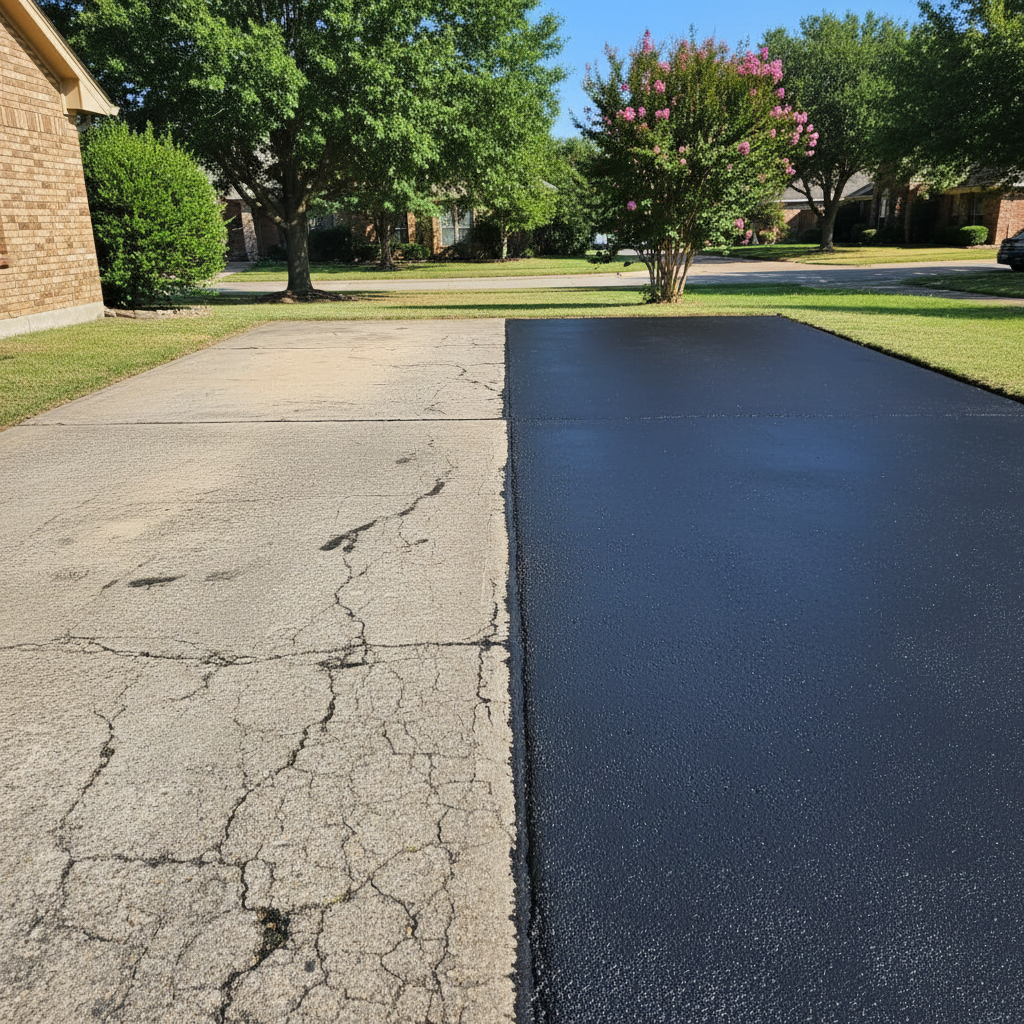
Alright, let's talk about slurry coating. If you're looking to protect your asphalt driveway, give it a fresh look, and extend its life, slurry coating is a smart move. But here's the thing: not all slurry coatings are created equal. You've generally got two main approaches to consider. I'm talking about the difference between a standard, single-layer slurry and a multi-layer, often polymer-modified system. You really need to know what you're getting into, especially with our Fort Worth weather.
Single-Layer Slurry: The Quick Refresh
This is what most folks think of when they hear "slurry coat." It's a mix of asphalt emulsion, aggregate (usually fine sand), water, and some additives. We apply it in one pass, typically about 1/8 to 1/4 inch thick. It's designed to fill minor surface voids, restore that deep black color, and provide a protective layer against UV rays and water intrusion.
Cost: Generally, this is your most budget-friendly option upfront. It uses less material and takes less time to apply, so the labor costs are lower too.
Durability: It'll give you a good few years of protection, usually 3-5 years. That depends on traffic, sun exposure, and how well your original asphalt was prepped. It's better than nothing, for sure, but it's not a bulletproof vest for your driveway.
Maintenance: Pretty straightforward. Keep it clean, address any new cracks as they pop up. You'll likely need to reapply it sooner than a multi-layer system.
Appearance: Looks great right after application. It brings back that dark, uniform look. It's a definite aesthetic upgrade.
Think of this as a good, solid topcoat of paint. It makes things look new and offers some protection, but it's not going to fix major structural issues or stand up to heavy abuse for decades.
Multi-Layer, Polymer-Modified Slurry: The Heavy-Duty Choice
Now, this is where we start talking about serious protection. A multi-layer system, often incorporating polymer-modified emulsions, is a different beast. Instead of one thin coat, you're typically looking at two or even three applications. The polymers in the mix add flexibility and strength, which is huge for us here in North Texas.
Cost: It's more expensive, no two ways about it. You're paying for more material, specialized additives, and more labor because it's multiple passes. But consider it an investment.
Durability: This is where it shines. We're talking 5-8 years, sometimes even longer, especially if it's maintained well. The polymers make the slurry more flexible. This helps it resist cracking from our crazy temperature swings and the clay soils we've got around areas like the TCU neighborhood. It also stands up better to traffic and wear.
Maintenance: Similar to the single layer, but you'll find it holds up better. Less cracking means less crack filling between applications. It's more resilient overall.
Appearance: Just like the single layer, it gives you that fresh, dark, uniform look. The added thickness can also help smooth out more minor imperfections in the existing asphalt surface.
This is more like putting down a durable, flexible membrane. It's built to last and handle more punishment.
Which One Should You Choose for Your Fort Worth Home?
Here's my take, based on years of seeing what works and what doesn't in our neck of the woods. If your driveway is relatively new (less than 5 years old), in great shape with minimal cracking, and you're just looking for a cost-effective way to refresh its appearance and get a few more years out of it, a single-layer slurry might be perfectly fine. It's a good maintenance step.
However, for most Fort Worth homeowners, I'm going to lean towards the multi-layer, polymer-modified system. Why? Our conditions. We get scorching summers, freezing winters, and a lot of movement in our clay soils. That combination is brutal on asphalt. A single, thin layer just doesn't offer the same level of protection or flexibility needed to really stand up to that.
You want a slurry that can expand and contract without immediately cracking. You want something that offers a thicker, more robust barrier against the sun's UV rays and heavy rain. The extra cost upfront for a polymer-modified, multi-layer application usually pays for itself in extended life and reduced headaches down the road. You'll get more years out of it, and your driveway will look better for longer.
Ultimately, it comes down to your budget and your expectations for longevity. But if you're serious about protecting your investment and want the best defense against what Texas throws at us, I'd strongly recommend going for the higher-quality, multi-layer approach. It's what we recommend most often at Fort Worth Paving Solutions for a reason. Give us a call, and we can take a look at your specific driveway and give you an honest assessment.