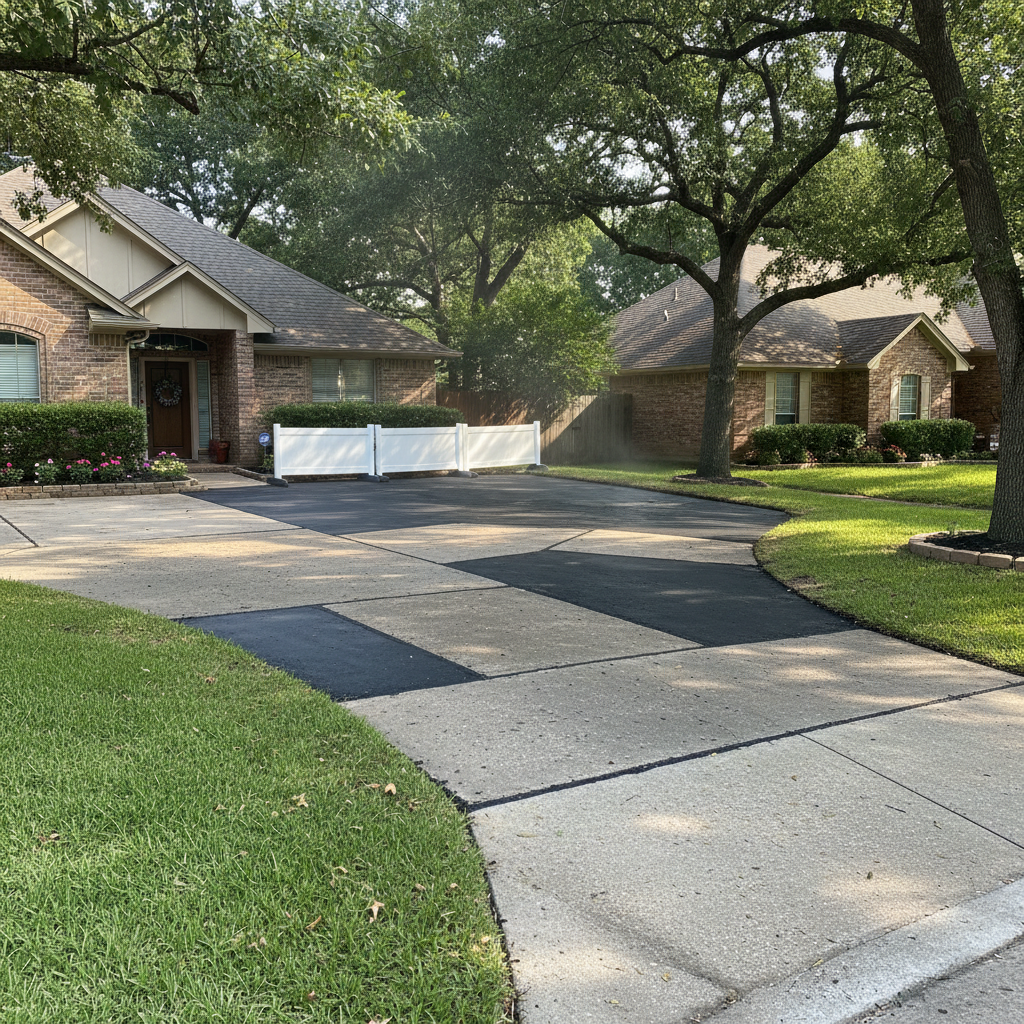
Got a pothole? Or maybe a few cracks are starting to spiderweb across your driveway? You know you need to get it fixed, but when's the best time to do it here in Fort Worth? It's not as simple as just calling someone up any old day, believe me. Our crazy Texas weather plays a huge role in how well that patch job's gonna hold up, and I've seen plenty of folks waste money by not understanding the timing.
Why Timing Matters for Asphalt Patches
Asphalt isn't just some solid rock, you know; it's a flexible material that reacts to temperature. When it's hot, it's softer and more pliable. When it's cold, it gets brittle. This matters a lot for patching because you want the new material to bond properly with the old and cure correctly. If you try to patch in the wrong conditions, you're basically just putting a band-aid on a problem that's going to pop right back up.
The Best Time to Patch: Spring and Fall
Honestly, if you can swing it, spring and fall are your sweet spots for asphalt patching in Fort Worth. Here's why:
- Moderate Temperatures: We're talking about those nice 50-85 degree days. This temperature range lets the asphalt mix stay workable, but it's not so hot that it cures too fast or so cold that it won't bond. It gives the patch material the best chance to properly adhere to the existing pavement and compact tightly, which is exactly what you want.
- Less Rain: While we get our share of spring showers, you generally have more predictable dry spells compared to summer thunderstorms or winter freezes. You absolutely cannot patch asphalt in the rain, or if the surface is wet. Water prevents proper adhesion and compaction, leading to early failure.
- Good Curing Conditions: The moderate temperatures allow the patch to cure gradually and thoroughly. This means a stronger, longer-lasting repair.
Think about late March through May, and then again from late September through November. Those are generally ideal.
When to Avoid Patching (and Why)
Just as there are good times, there are definitely bad times. You'll want to steer clear of:
- The Dead of Summer (July & August): It gets brutally hot here, sometimes over 100 degrees for weeks on end. While asphalt is laid hot, patching in extreme heat can cause issues. The material can become too soft, making it hard to compact properly. Plus, any moisture evaporates quickly, which can lead to a less stable patch. It's also just plain miserable for the crew, which can impact the quality of work.
- Winter Freezes (December - February): This is a big no-no. If the ground is frozen, or if temperatures are consistently below 45-50 degrees, patching is a bad idea. The cold makes the asphalt brittle, and it won't bond well. You'll end up with a patch that cracks out or comes loose quickly. Plus, if there's any moisture that freezes, it'll expand and compromise the whole repair.
- Rainy Days: I already mentioned this, but it bears repeating. If it's raining, or if rain is expected within 24 hours, don't even think about patching. A good contractor like us at Fort Worth Paving Solutions will reschedule if the weather turns.
Protecting Your Investment Year-Round
Getting a patch done right is only half the battle. You've got to protect that investment. Here's what I tell my customers:
- Keep it Clean: Sweep off dirt, leaves, and debris regularly. This prevents organic matter from breaking down and holding moisture against the asphalt, which can lead to deterioration.
- Address Spills Immediately: Oil, gas, and other chemicals are asphalt's worst enemies. They break down the binder that holds the aggregate together. Clean up any spills as soon as you see them.
- Don't Overload it: If you've got a heavy RV or trailer, try not to park it in the exact same spot for months on end, especially if it's on a patched area. Constant heavy pressure can cause depressions or further cracking.
- Sealcoating: This is your best friend for long-term protection. A good sealcoat every few years (after any necessary patching has cured) protects your asphalt from UV rays, water penetration, and chemical spills. It's like sunscreen for your driveway.
- Mind the Water: Make sure your gutters and downspouts are directing water away from your driveway. Standing water is terrible for asphalt, especially here in Fort Worth where our expansive clay soils can cause sub-base movement when saturated.
Look, patching your asphalt is a smart move to extend the life of your driveway and prevent bigger, more expensive problems down the road. Just make sure you're doing it at the right time and taking care of it afterward. If you've got questions about a specific patch job, give us a call. We're happy to take a look.