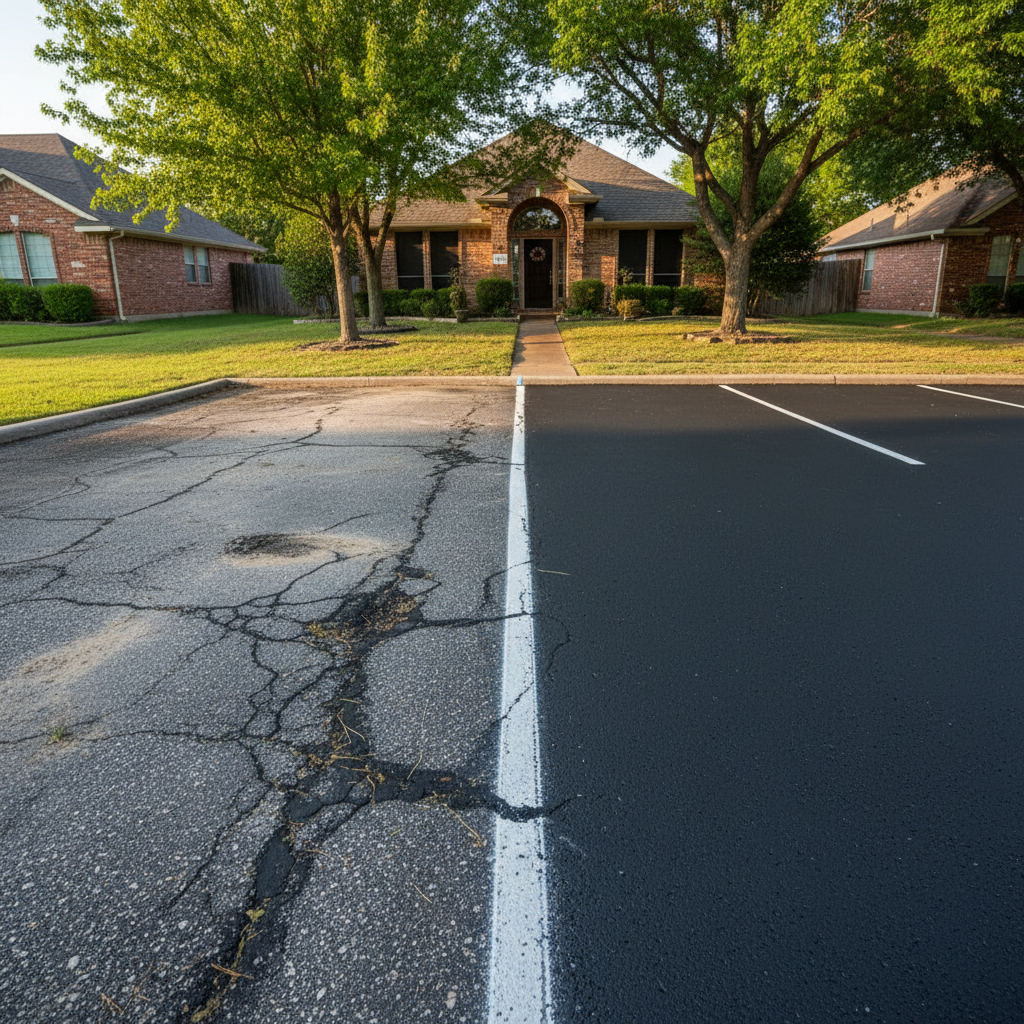
Striping Your Asphalt: Paint or Thermoplastic?
So, you've just laid down a fresh asphalt driveway, or maybe you're just thinking about giving an old one a facelift with some clear markings. Maybe it's a basketball court, some parking spots, or even just a crisp edge. The big question I hear a lot around Fort Worth is, what's the real difference between regular traffic paint and thermoplastic for striping? It's not just about what looks good on day one, you know; it's about what actually lasts when our Texas sun is beating down and the occasional flash flood rolls through.
Traffic Paint: The Common Choice
Let's kick things off with good old traffic paint. This is probably what most people picture when they think about lines on asphalt. It's a liquid, usually water-based or solvent-based, and we either spray it or roll it on. You'll spot it everywhere, from city streets to school parking lots.
Cost
Right off the bat, paint is generally the cheaper option up front. It costs less per gallon, and putting it down is usually quicker, needing less specialized gear. If your budget is tight and you just need to define a space, paint's your buddy.
Durability
Now, here's where paint starts to show its weak spots, especially in a place like Fort Worth. Our intense UV rays and wild temperature swings — we're talking 20 degrees in winter to over 100 in summer — are brutal on paint. It dries out, fades, cracks, and peels over time. You might get a year or two of looking decent before it starts to look pretty rough. Heavy traffic, say if you run a busy home business or have multiple cars coming and going, will wear it down even faster.
Maintenance
Because it doesn't last as long, you'll find yourself repainting more often. That means more frequent scheduling, more disruption, and those recurring costs really add up. It's not a huge deal for a small residential basketball court, but if you're talking about a larger private road or a shared driveway, those touch-ups become a real chore.
Appearance
When it's fresh, painted lines look sharp and clean. You can get it in all sorts of colors, and it dries pretty fast. The downside? As it breaks down, it can look pretty shabby, with chipped edges and faded colors.
Thermoplastic Striping: The Long-Haul Solution
Alright, let's talk about thermoplastic. This isn't paint at all; it's a plastic material that starts out solid — usually as granules or blocks. We heat it up until it's molten, then apply it to the asphalt, where it cools and bonds right to the surface. Think of it more like a super durable plastic coating instead of just a layer of paint.
Cost
The initial cost for thermoplastic is higher. The material itself is more expensive, and putting it down needs special equipment that heats the stuff to hundreds of degrees. It takes more skill and time to get it right. So, if you're only looking at the first bill, it's going to be more than paint.
Durability
This is where thermoplastic really shines, especially for Fort Worth weather. It's incredibly tough. It resists fading from the sun, doesn't crack or chip easily with temperature changes, and stands up to traffic way better than paint. We're talking years, not just months or a couple of years, before you'd even think about needing a refresh. It's built to handle heavy wear and tear, which is why you see it on highways and busy commercial parking lots.
Maintenance
Lower maintenance, hands down. Because it lasts so much longer, you won't be thinking about restriping for a good five to ten years, sometimes even more, depending on how much traffic it sees. That saves you time, hassle, and money in the long run.
Appearance
Thermoplastic lines are typically thicker and have a slightly raised profile, which can give them a more substantial, professional look. They stay vibrant and crisp for a much longer time, keeping that fresh appearance year after year. Oh, and some thermoplastic materials even include reflective beads, making them super visible at night, which is a nice safety bonus for driveways.
My Recommendation for Fort Worth Homeowners
Look, if you're just putting down some temporary markings for a kids' game on the driveway, or you're selling the house next month and just want a quick spruce-up, paint is totally fine. It's cheap, and it gets the job done for a little while.
But if you're after something that's truly going to last, something that'll stand up to our crazy Fort Worth weather — those scorching summers that bake everything, the sudden freezes, and the clay soils that can shift things around — then thermoplastic is absolutely the way to go. It's a better investment over time, no doubt. You pay more upfront, but then you don't have to worry about it for years. For a private road in a community like Westover Hills or a long, winding driveway out in Aledo, the durability of thermoplastic makes it the clear winner in my book.
We do both here at Fort Worth Paving Solutions, so we've seen firsthand how each holds up. You want to do it right, and you want it to last, right? That's why I usually steer folks toward thermoplastic for any kind of permanent striping. It's just a smarter choice for our environment.