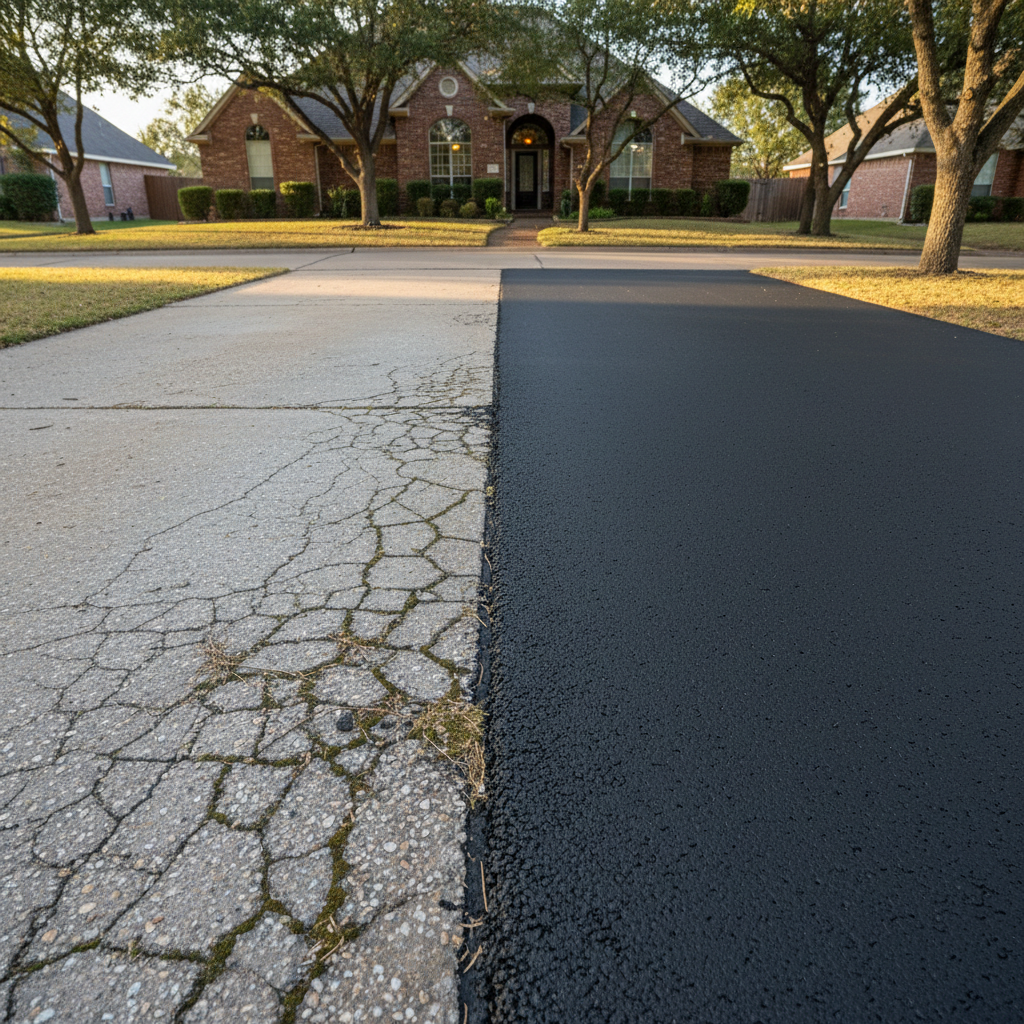
Your asphalt driveway isn't looking so hot, is it? Maybe it's got cracks spreading like spiderwebs, or potholes deep enough to hide a small armadillo. When it gets to that point, you've got two main routes to a fresh surface: an asphalt overlay (sometimes called resurfacing) or a full depth replacement. I see folks wrestle with this choice all the time here in Fort Worth, and honestly, there's no single right answer for everyone. It really depends on what's going on underneath.
What's an Asphalt Overlay?
Think of an overlay as putting a new skin on your old driveway. We're talking about laying a new layer of asphalt, usually 1.5 to 2 inches thick, right on top of your existing one. Before we do that, though, we've got to prep the old surface. That means cleaning it thoroughly, filling any major cracks or potholes, and sometimes applying a tack coat to help the new layer stick. It's a popular option because it's generally quicker and less disruptive than tearing everything out, which is a big plus for busy homeowners.
What's Full Depth Replacement?
This is exactly what it sounds like: we rip out the old driveway, right down to the dirt. Every single bit of existing asphalt and often some of the base material gets hauled away. Then, we prepare the subgrade, lay down a fresh aggregate base, and finally, pave a brand new asphalt surface. This is the 'start from scratch' approach. It's a bigger job, takes longer, and naturally, costs more upfront.
Cost: Where Your Wallet Comes In
Let's be direct: an overlay is almost always going to be cheaper than a full depth replacement. You're using less material, and there's significantly less labor involved in demolition and hauling away debris. For a typical residential driveway, you could be looking at saving anywhere from 30% to 50% on the initial project cost with an overlay. That's a big chunk of change, especially if you've got a long or wide driveway, right?
Durability and Longevity: How Long Will It Last?
Here's where the 'cheaper isn't always better' argument comes into play. An overlay's lifespan is heavily dependent on the condition of the underlying asphalt. If your existing driveway has minor surface cracks and a solid, stable base, an overlay can give you another 8-15 years of good service. But if the base underneath is failing – if you've got significant heaving, alligator cracking across large areas, or drainage issues – then an overlay is just putting a band-aid on a broken leg. Those underlying problems will eventually telegraph through the new surface, and you'll be looking at repairs much sooner, sometimes in just a few years.
A full depth replacement, on the other hand, gives you a completely new foundation. When done right, with proper compaction and drainage, you can expect 15-25 years, sometimes more, out of it. You're building from the ground up, so you're addressing any base failures or subgrade issues that might have caused the original driveway to deteriorate. This is especially important in places like Fort Worth, where our expansive clay soils can cause a lot of movement and stress on paved surfaces.
Maintenance: Keeping It Looking Good
Both options will benefit from regular maintenance like sealcoating every 2-3 years and prompt crack filling. However, with an overlay, you might find yourself dealing with reflective cracking sooner if the old cracks weren't properly addressed or if the base continues to shift. With a full depth replacement, since you've got a fresh start, your maintenance efforts are generally more effective and go further in extending the life of the pavement.
Appearance: The Curb Appeal Factor
Both an overlay and a full depth replacement will give you a beautiful, smooth, black surface initially. The difference comes down to how long that appearance holds up. If the underlying issues are severe, an overlay might start showing imperfections like bumps or cracks re-appearing sooner. A full depth replacement, with its entirely new structure, will generally maintain its pristine look for a longer period.
My Recommendation for Fort Worth Homeowners
Alright, so what's the call? As a contractor who's seen it all here at Fort Worth Paving Solutions, I'll tell you this: if your driveway has widespread structural failures – meaning deep, wide cracks, potholes that keep coming back, large areas of 'alligator' cracking, or significant sinking/heaving – then you really need a full depth replacement. An overlay in that situation is just delaying the inevitable and will end up costing you more in the long run.
However, if your driveway's issues are mostly superficial – minor cracking, fading, or some shallow potholes, and the base feels solid when you walk or drive on it – then an asphalt overlay is a fantastic, cost-effective solution. It'll refresh your curb appeal and give you many more years of service without the bigger price tag and disruption of a full tear-out.
The best way to know for sure is to have a professional come out and take a look. We can assess the condition of your existing asphalt and its base, and give you an honest recommendation based on what we find. Don't guess; get an expert opinion. It'll save you headaches and money down the road.