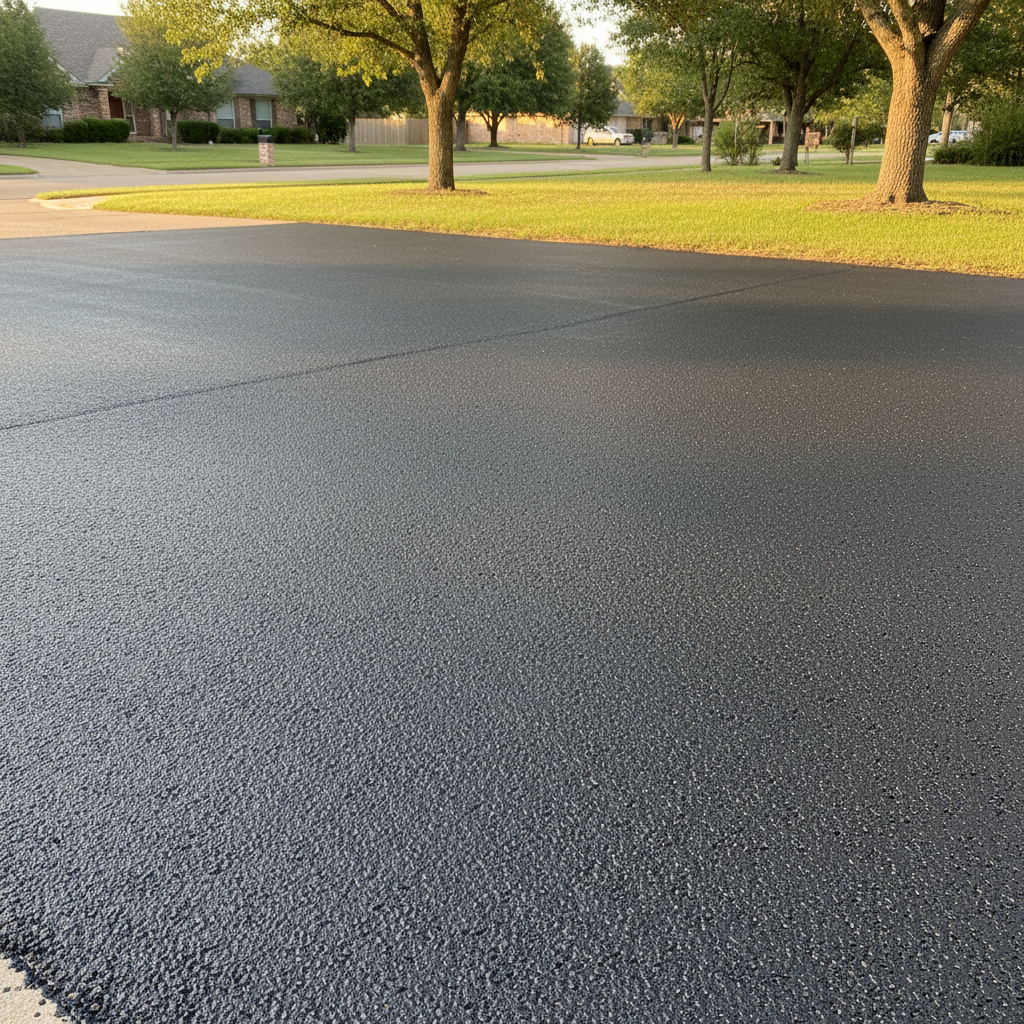
Alright, let us talk about Slurry Coating your driveway in Fort Worth. Fort Worth Paving Solutions sees many homeowners around Fort Worth, from the older homes in Arlington Heights to the newer builds out in Alliance, wondering if they can tackle this job themselves. The truth is, it is not rocket science, but it is also not just slapping some paint on your driveway. There is a right way and a wrong way to do it, and the wrong way can cost you more money in the long run.
Before You Start: Prep is Everything
You would not paint a dirty wall. The same goes for your driveway. Good preparation makes all the difference in how well your Slurry Coat sticks and how long it lasts. Do not skip these steps, or you will be redoing it sooner than you think.
- Clean it Up: First, you have to get that driveway spotless. Sweep off all the loose dirt, leaves, and debris. Then, hit it with a good power wash. You want to remove any oil stains, grease, or grime that has built up. If there is mildew, you will need to treat that also. Think about all that red clay dust Fort Worth gets around here; that stuff needs to go.
- Fix Those Cracks and Potholes: Slurry Coating is good for sealing hairline cracks, but it is not a miracle worker for big problems. Any cracks wider than about 1/8 inch, or any potholes, need to be repaired properly beforehand. If you have deep cracks or potholes several inches deep, that is usually a sign of bigger issues underneath, and you might need a professional for those repairs. Do not just try to fill a big crack with slurry; it will not hold.
- Edge Work: You will want to protect anything you do not want coated, like your garage door, landscaping, or house foundation. Use painter's tape and plastic sheeting. Overspray is a pain to clean up.
- Check the Weather: This is important, especially in Fort Worth. You need consistent temperatures above 50°F, both day and night, for at least 24 to 48 hours after you apply the slurry. Humidity also plays a role; high humidity slows down drying time. Do not apply it if rain is in the forecast. If it rains before it cures, you have a big mess and a failed job. Our Texas summers can be brutal, but sometimes those dry, warm days are perfect. Just avoid those pop-up thunderstorms in Fort Worth.
During the Project: Getting the Slurry Down
Okay, you have prepped everything. Now for the actual application. Slurry is a mix of asphalt emulsion, aggregate (fine sand or crushed rock), water, and other additives. It is thicker than a typical Sealcoat, and it is designed to fill small voids and give you a fresh, skid-resistant surface for your Fort Worth property.
- Mixing it Right: If you are buying a ready-mix product, follow the manufacturer's instructions exactly. If you are mixing your own, the consistency is key. It should be like pancake batter, but not too thin or too thick. Fort Worth Paving Solutions generally does not recommend mixing your own unless you really know what you are doing.
- Application Tools: For a DIY job, you will likely be using squeegees or a brush. Professionals use specialized spreader boxes and machines for a more uniform application. You will want to work in small sections, pouring out the mixed material and spreading it evenly. Do not overwork it, and try to keep a consistent thickness.
- Edges and Joints: Pay attention to your edges. You want a clean line, not a wavy mess. For joints, you want them clean and without excess buildup.
- Working Solo vs. Team: If you have a buddy, it makes the job a lot easier. One person can mix, and the other can apply. It helps keep things moving so the slurry does not start to set up before you are ready.
After the Application: Curing and Care
You have done the hard work, but you are not done yet. The curing process is important for the longevity of your new surface in Fort Worth.
- Stay Off It! This is probably the hardest part for most homeowners. You absolutely cannot drive on your newly coated driveway for at least 24-48 hours. Foot traffic might be okay after 4-8 hours, depending on the weather, but vehicle traffic needs more time. If you drive on it too soon, you will leave tire marks and compromise the coating.
- Full Cure: While you can drive on it after a couple of days, the slurry will continue to cure and harden over the next week or so. Avoid harsh chemicals or heavy scraping during this time.
- Maintenance: Once it is fully cured, keep it clean. Sweep off debris regularly. Address any new oil or chemical spills immediately, as they can break down the asphalt. Slurry Coating typically lasts 5-7 years, sometimes longer, depending on traffic and our crazy Fort Worth weather.
DIY or Call a Pro?
So, can you do this yourself? For small driveways with minimal damage, if you are handy and meticulous, you can give it a shot. DIY can save you some money upfront on labor. But here is what Fort Worth Paving Solutions has seen:
- DIY Challenges: Store-bought slurry products often are not as high-quality or durable as what a professional uses. You might get an inconsistent finish, streaks, or missed spots. Plus, it is a time-consuming, physically demanding job.
- When to Call Fort Worth Paving Solutions: If your driveway is large, has significant cracking, drainage issues, or structural problems, you really need a professional. Fort Worth Paving Solutions has the specialized equipment, the commercial-grade materials, and the experience to get a uniform, long-lasting finish. A professional job might cost more initially, but it often lasts longer and provides better protection, saving you headaches and money down the road. Fort Worth Paving Solutions deals with the Fort Worth heat and soil conditions all the time, so we know how to make a Slurry Coat last here in Fort Worth.
Ultimately, it is your call. Just make sure you go into it with your eyes wide open. A little planning and honest assessment of your driveway's condition and your own skills will save you a lot of trouble.